10. The Cleveland Torso Murderer
Between 1935 and 1938, a Great Depression-era serial killer known as The Cleveland Torso Murderer (also called The Mad Butcher of Kingsbury Run) terrorised Cleveland, Ohio.
Multiple male and female victims were both beheaded and dismembered by the attacker, who frequently dumped their bodies in the poor Kingsbury Run district of Cleveland.
Twelve victims have been officially linked to the Cleveland Torso Murderer, although some academics believe the actual death toll may be as high as twenty.

The murderer targeted the poor working class and the drifters who lived in the Kingsbury Run neighbourhood’s temporary housing. Because of this, many of the Torso Murderer’s victims are still unknown.
On September 23, 1935, the first verified Torso Murderer victims were located. They were an unnamed man and Edward Andrassy. About 30 feet distant from the remains of the unknown male was where Andrassy’s body was discovered.
Both had been castrated and had their heads removed. Eventually, the heads were located. Following suit were other gruesome mutilations and murders. The fact that some of the remains were found later, sometime after the murders, complicated the search for the murderer.

Dr. Francis E. Sweeney was suspected of being the main culprit, however there wasn’t enough proof to convict him. Another man, Cleveland resident Frank Dolezal, was detained by the police in August 1939. After being identified as a suspect in the murder of Florence Polillo, a victim of the Torso killer, only to pass away while they were investigating the case.
Cuyahoga Community College scholars published evidence in 2010 that absolved Dolezal of all charges. The Cleveland Torso Murderer case has still not been solved after all these years.
9. Bible John
In the late 1960s in Glasgow, Scotland, three women with brunette hair, who were between the ages of 25 and 32, were brutally murdered after visiting a dance and music venue known as the Barrowland Ballroom.
The victims were beaten, raped, and killed after leaving the Ballroom with a mysterious man. Witnesses who saw the victims before they vanished reported that the man the women departed with frequently quoted Scripture. Earning him the nickname “Bible John.”

Bible John gave brief sermons about adultery and read out other biblical passages in the club. Patricia Docker, 25, his first victim, was discovered in a South Glasgow garage doorway, naked. Extreme blunt force trauma and evidence of strangling were visible on her body. These similar techniques would later be used by Bible John to murder two other women, Jemima McDonald and Helen Puttock.
Bible John’s identity is still a mystery as he was never found. Although Peter Tobin, a convicted serial murderer and rapist, was thought to be responsible for the killings, no charges were ever brought against him in the Bible John case.
8. Servant Girl Annihilator
Austin, Texas was victimised by an axe-wielding murderer in the late 1800s. The Servant Girl Annihilator killed seven women and one man, and severely attacked six more women and two more men.
The Servant Girl Annihilator would strike late at night. Before brutally attacking them with an axe, he dragged the majority of his victims outside. For a little less than a year, the murderer tore through Austin. Then, just like that, the attacks ended.

Over 400 people were allegedly questioned in relation to the attacks. According to an 1885 New York Times article, but nobody was ever put on trial.
In the years since, a lot more suspicions have come to light. One well-known name in the list of suspects? The Jack the Ripper. Shirley Harrison claims in her book Jack the Ripper: The American Connection that before beginning his reign of terror in London’s Whitechapel district, Jack the Ripper developed his ruthless skills in America.

7. Colonial Parkway Killer
Couples from Virginia were the victims of a killer’s attacks along the Colonial Parkway in the late 1980s. Three couples’ bodies were discovered; the bodies of the fourth couple were never located, though their car and some of their clothing were discovered.

The three couples and all four cars were found along the Colonial Parkway. Usually only a few days after they went missing. In all cases, there were no signs of attempted robbery or sexual assault.
A few theories about the killer have been proposed, including that the perpetrator was a police officer, or posed as one to mislead the victims.
A retired Milwaukee detective, Steve Spingola, believes that the killings were committed by different killers. Though a family member of one of the victims is suspicious of Spingola’s conclusion and asserts that he merely sought to profit from covering the case. The murders remain under investigation to this day.
6. Long Island Serial Killer
Throughout the late 1990s and early 2000s, the Long Island serial killer, also known as LISK and the Craigslist Ripper, murdered at least 10 women and dumped their bodies along the Ocean Parkway in Long Island, New York.

The Long Island serial murderer mostly targeted sex workers, many of whom posted advertisements for their services on Craigslist. Authorities think the murderer contacted these ladies on Craigslist, set up a meeting place, and then murdered each victim after raping them.
At least one of the LISK homicides has John Bittrolf, who was convicted of killing two sex workers in the early 1990s, as a suspect. James Burke was a noteworthy suspect as well. One of the victims had previously worked for Burke, the former police chief of Suffolk County. The review indicated that Burke had impeded an FBI investigation into the Long Island serial killer case while serving as police chief. He was found guilty of impeding traffic and assaulting a guy after he stole some of his personal belongings from his car. Burke was never charged in relation to the murders themselves, but in February 2016, he admitted guilt to a conspiracy to obstruct justice. Late in 2018, he was let out of prison.

5. Freeway Phantom Killer
A murderer started stalking Washington, D.C.’s Northeast neighbourhood in 1971. Between the ages of 10 and 18, six young black females were killed within a year and a half of one another. Victims were kidnapped as they were making their way to the store, school, work, or home. Each victim would be raped and strangled before their remains were dumped along the highway.

The next-to-last victim had a note when she was discovered. “This is equivalent to my insensitivity to others, especially women,” it said. If you can catch me, I’ll let the others in. It had “Free-way Phantom” written on it.
Despite no convictions, police suspected a local gang in the series of attacks. The case files have since been lost, making it nearly difficult to solve the case at this time.
4. Highway of Tears Murders
In British Columbia, a startling number of young women have vanished or have been killed along a lonely stretch of road. The crimes date back to 1969, and given the sheer number of victims and the amount of time involved, detectives have come to the conclusion that numerous killers are responsible for the Highway of Tears Murders.

Locals claim that racism was a factor in the attacks and that the lack of progress in each case is because many of the victims were First Nations women.
Possibly while it’s conceivable that some or even many of these women were murdered by various individuals, it’s thought that a significant portion of the killings can be linked to a single murderer.
Bobby Jack Fowler, an American murder suspect, is thought to have killed 10 to 20 people, according to the Royal Canadian Police. Cody Legebokoff, a serial killer from Canada, was found guilty of one of the Highway of Tears killings.
Despite their efforts, the police don’t think they will ever be able to solve every one of the more than 40 murders that have taken place along this section of the roadway. Too much time has gone in a lot of the situations. Others just lack sufficient evidence to bring charges against the suspects.
3. Alphabet Murders
Three young girls were raped and then strangled around Rochester, New York, in the early 1970s. The girls shared not only the same manner of death, but also their alliterative names.
The bodies of the girls were left in towns whose names began with the same letter. Michelle Maenza, Wanda Walkowicz, and Carmen Colon were discarded in Macedon, Webster and Churchville, respectively.

The California serial killer Joseph Naso, who killed (a different) Carmen Colon, Pamela Parsons, Roxene Roggasch, and Tracy Tofoya, used a similar methodology. As a result of a mention of a girl’s death in the Buffalo woods in Naso’s journal, police decided to compare Naso’s DNA to DNA from the crime locations in Rochester. The DNA didn’t match up.

The Alphabet murders were also linked to Kenneth Bianchi, who later collaborated with his cousin Angelo Buono, Jr., to perpetrate the Hillside Strangler killings. Bianchi, a Rochester native, was a resident of Rochester at the time of the murders even though he has maintained his innocence. In relation to the Alphabet murders, no suspect has ever been taken into custody.
2. Bible Belt Strangler
The Bible Belt Stranger Murders or the Redhead Murders were a series of murders that took place in the 1980s in the Bible Belt in the United States. All of the victims had red or reddish hair, many of them were never recognised. Investigators concluded that the victims were likely travelling or performing sex services because many of their remains were found dumped on important American highways.

In 1983, a homicide close to Littleton, West Virginia, was the first one connected to the perpetrator. The body was discovered by two elderly people when they were driving along a local roadway. In addition to being unable to identify the woman, investigators were also unable to identify a suspect. Throughout the 1980s, more victims, many of whom had red hair, started to appear in neighbouring states.
The last victim identified was Elizabeth Lamotte, whose body was discovered in 1985 near Greeneville, Tennessee, showing signs of severe blunt-force trauma and a stab wound. Only four of the putative victims have been properly identified.
Two suspects were questioned by police in relation to the killings, but the real identity of the murderer was never found.
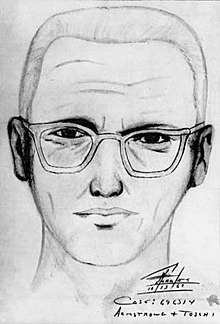
1. The Zodiac Killer
Due to the ferocity of his crimes and the way he played games with the law and the media, The Zodiac Killer, captivated the country throughout the late 1960s and early 1970s. He wrote the media countless letters and cryptograms, daring them to solve his riddles and catch him.

A history professor and his wife were the only ones who were able to decrypt one of the encrypted communications. It was horrifyingly discovered that the Zodiac had slaughtered to gather slaves for his afterlife.
The Zodiac Serial Killer took credit for 37 murders. However, just seven incidents have been confirmed, including three distinct sets of male-female couples and a cab driver. Two of the seven attackers survived, bringing the official death toll of the Zodiac to five.

Over the years, a variety of books and movies concerning the murderer’s atrocities have been published. While some of these books investigate the case, others, aim to provide an answer.
Officially, still till this day, the famous killer’s identity is a mystery.
Leave a Reply