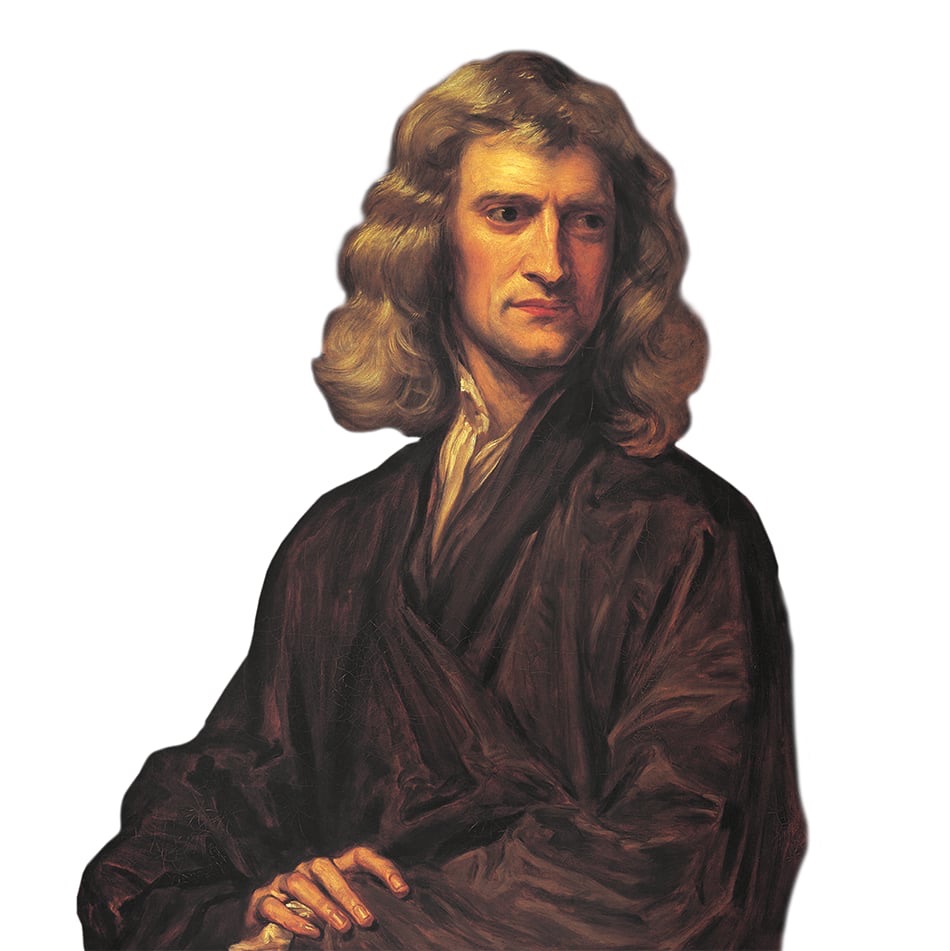
10. Master Of The Mint
Sir Isaac Newton served as Master of the Royal Mint from 1699 until his death in 1727. During his tenure, he oversaw the recoinage of England’s currency, implementing measures to combat counterfeiting and restore confidence in the nation’s coinage.
As Master of the Mint, Newton played a pivotal role in standardizing the nation’s coinage and implementing reforms to ensure its integrity. His meticulous approach to minting laid the foundation for modern monetary systems and earned him a reputation as a visionary in the field of economics.

9. Founding Father Of The Royal Mint
Alfred the Great, King of Wessex from 871 to 899, is credited with founding the Royal Mint in the late 9th century. Under his reign, the Mint was established as a means of centralizing control over currency production and ensuring the uniformity and quality of coinage throughout the kingdom.
One of the oldest coins in the Royal Mints collection is an Alfred the Great’s silver penny, crafted in London by hand, dates to approximately 886 AD, and is among the oldest coins in the Royal Mints collection.

8. Royal Monarchy and The Mint
Since the seventeenth century, kings have followed the coinage custom of facing the opposite direction from their predecessor. Ever contentious, Edward VIII chose not to adhere to this custom and instead chose to face left, just as his father, George V, had.

7. The Royal Mint Produces Coins For Countries All Over The World
The Royal Mint makes coins for more countries than just the UK. As the world’s top export mint, the Mint also creates a portion of the coins used in other commonwealth nations, including Australia and New Zealand, and in fact produces coins for more than 60 countries.

6. Trial Of The Pyx
Held annually at London’s Goldsmiths’ Hall, the Trial of the Pyx is an ancient ritual rich in history. In a customary ceremony, coins from The Royal Mint, those that are going into circulation and those that aren’t, are evaluated for quality and accuracy under the direction of The King’s Remembrancer. The Trial of the Pyx has been in place since the thirteenth century and has persevered through times of political unrest, war, and, more recently, the Covid-19 pandemic to guarantee that the coins made at The Royal Mint meet the strict requirements for coinage. It is one of the oldest quality control operations in the world.

5. Royal Mint Medal Making
The Royal Mint in 2012 won the contract for making the Olympic and Paralympic medals for the 2012 Olympic Games, were it produced 4700 medals for the games.
The Royal Mint has also over produced millions of war medals over the centuries, and in 1946 alone, after WW2 was over, it made over 13 million war medals for the veterans who had served.

4. First Female Master of The Mint
The current Master of The Mint, Anne Jessop, is the Royal Mints first Female chief, in over 2000 years, and in its entire history!

3. 1933 Penny
One of the rarest coins ever made by the Royal Mint, and sort after by collectors is the 1933 penny. The reason it is so rare is that in 1933 there was no requirement for the Royal Mint to produce any pennies because there were already more than enough in circulation.
But a limited quantity, roughly seven, were made in response to specific requests for a commemorative coin to remember the year.
Each of these utilised the prevailing design of the period, with Britannia on one side and King George V’s head on the other.
Three of the coins were made specifically for the King to personally lay beneath the cornerstones of significant structures that were being built.
One of these rare coins was sold in 2016 was sold for £72,000!

2. Britannia
Britannia, a female warrior, appeared for the first time on Roman coins in 1672 and has appeared on the coins of every monarch since then. Britannia represents the United Kingdom in feminine form, armed with a shield and trident and donning a Corinthian helmet. For decades, the image of this woman has served as a symbol of British pride, cohesion, and strength. Historically, the strength of Britain was closely linked to its maritime prowess.

1. Volume of Coinage
In 1966, 4 billion coins were in use but in 2018, there are nearly 30 billion. And every year around 1.5 billion coins are produced in the UK at the Royal Mint.

Leave a Reply